
How Long Does Tramadol Stay in Your System?

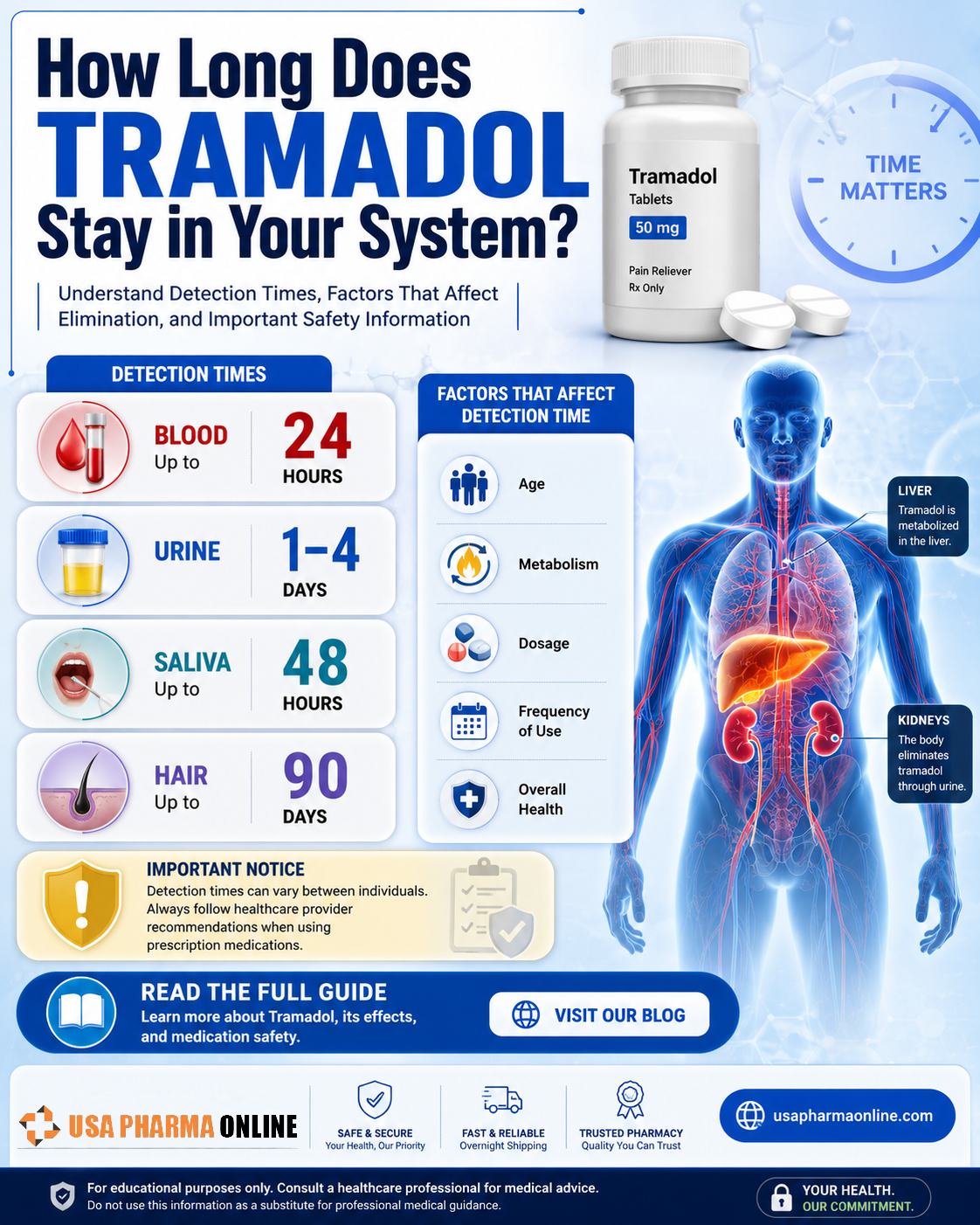
Tramadol is a pain medication that doctors prescribe to help with pain. Many people who take tramadol wonder how long it stays in their bodies after they take a dose.
One of the common questions about tramadol is:
“How long does tramadol stay in your system?”
The answer to this question depends on personal factors. Your body gets rid of medication based on how much you take, how often you take it, your metabolism, age, kidney function, liver health, how much water you drink, and what type of tramadol you take.
Some people may get rid of tramadol quickly, while others may still have traces of it in their bodies for days.
Understanding how long tramadol stays in your system can help you know more about medication safety, drug testing, possible interactions, and how to manage pain safely.
This guide explains how tramadol works, how your body removes it, how long different tests can detect tramadol, and what factors affect how long it stays in your system.
Tramadol works to help with pain, and knowing how your body processes it can help with pain management and medication use.
The more you know about tramadol, the better you can manage your pain and medication.
“How long does tramadol stay in your system?”
What Is Tramadol?
Tramadol is a medicine that doctors give to people to help with pain that’s not too bad but still hurts a lot. Doctors will give people tramadol when other ways of dealing with pain do not work well.
Tramadol works in a way it does a few different things to help with pain. It talks to the parts of the brain that deal with pain. It also affects the chemicals that send pain signals.
Tramadol affects some chemicals like serotonin and norepinephrine, and the natural ways that the body deals with pain.
These things help to change how the brain and the rest of the body feel pain.
Doctors might give people tramadol for pain from an injury or for when they’re getting better after a medical procedure.
They might also give it for pain in the muscles and joints or for pain that lasts a long time.
There are times when doctors might give people tramadol for pain, but it is always for a good reason.
Before a doctor gives someone tramadol, they will look at the person’s health history because tramadol can cause problems, and people need to be careful when they take it.
A doctor wants to make sure that tramadol is a choice for the person and that they will use it correctly.
How Does Tramadol Work Inside Your Body?
When you take tramadol, it goes into your bloodstream through your system.
The tramadol then moves around your body and gets to the areas that deal with pain.
Your liver is very important for breaking down the tramadol.
When your liver breaks down the tramadol, it makes a few things, including O-desmethyltramadol.
This thing that is made of O-desmethyltramadol helps tramadol get rid of pain.
Your body gets rid of tramadol through the liver, the kidneys, and natural ways of eliminating things.
There are things that decide how fast your body gets rid of the tramadol.
For example, a liver that is healthy can break down tramadol quickly.
If your kidneys do not work well, it can take longer to get rid of the tramadol.
Some other medications can also affect how your body breaks down the tramadol.
How old you are can also affect how your body handles the tramadol.
Because everyone’s body is different, tramadol can stay in one person’s body longer than it stays in someone’s body.
The tramadol stays in your system for an amount of time, and this time can be different for each person who takes the tramadol.
How Long Does Tramadol Stay in Your System?
Generally, tramadol can remain detectable in the body for several days after the last dose.
The exact timeframe depends on:
- The amount taken
- How often you take it
- Your body’s metabolism
- The testing method used
A single dose may leave the body faster than repeated use over several days or weeks.
Understanding Tramadol Half-Life
The half-life of a medication refers to the time your body needs to reduce the amount of the drug by half.
Immediate-release tramadol has an average half-life of around 6 to 7 hours.
The active metabolite of tramadol may have a slightly different elimination timeline.
The body usually needs multiple half-lives to remove most of a medication.
Because of this, tramadol may remain detectable for approximately:
1 to 3 days in many people
However, this timeframe can vary significantly depending on individual health factors.
How Long Does Tramadol Stay in Urine?
Urine testing is one of the most common methods used to detect medication use.
Tramadol may remain detectable in urine for approximately:
1 to 4 days after use
The detection period can change depending on:
Dosage
Higher doses may take longer for the body to process.
Frequency of Use
People who take tramadol regularly may have longer detection windows.
Kidney Function
Since kidneys help remove medication waste, kidney health can affect elimination.
Metabolism
A faster metabolism may remove substances more quickly.
Urine testing can detect recent medication exposure but does not always show the exact time someone took a dose.
How Long Does Tramadol Stay in Blood?
Blood tests usually have a shorter detection window compared with urine tests.
Tramadol may remain detectable in blood for:
Several hours to approximately one day
Blood testing provides information about recent medication levels.
Healthcare professionals may use blood testing when they need detailed information about medication concentration.
How Long Does Tramadol Stay in Saliva?
Saliva tests can detect some medications after use.
Tramadol may remain detectable in saliva for:
Around 1 to 2 days
Several factors influence saliva detection, including:
- Amount taken
- Time since last dose
- Individual metabolism
- Test sensitivity
Saliva testing usually focuses on recent medication exposure.
How Long Does Tramadol Stay in Hair?
Hair testing works differently from blood, urine, and saliva tests.
Hair samples may show medication exposure over a longer period.
Tramadol may remain detectable in hair for:
Several months
Hair testing usually reflects long-term patterns rather than recent use.
The detection period depends on:
- Hair growth rate
- Sample length
- Testing method
Factors That Affect How Long Tramadol Stays in Your System
Many things influence how quickly your body removes tramadol.
1. Dosage Amount
The amount of tramadol you take affects how much your body needs to process.
A larger dose may require more time for elimination.
2. Frequency of Use
Occasional use and regular use affect the body differently.
Repeated use may cause medication levels to remain present for a longer time.
3. Age
Age affects metabolism.
Older adults may process some medications more slowly due to natural changes in liver and kidney function.
4. Liver Health
The liver helps break down tramadol.
Conditions affecting liver function may influence how quickly the body clears the medication.
5. Kidney Function
The kidneys help remove medication byproducts.
Reduced kidney function may slow elimination.
6. Other Medications
Some medications can interact with tramadol.
Always tell your healthcare provider about:
- Prescription medications
- Supplements
- Herbal products
- Other substances
This information helps healthcare professionals make safer treatment decisions.
Tramadol Extended Release vs Immediate Release
Tramadol comes in different formulations, and the type you take can affect how long it stays in your system.
Immediate-Release Tramadol
Immediate-release tramadol releases the medication into your bloodstream relatively quickly.
Doctors may prescribe this type when someone needs pain relief that starts sooner.
Because the medication enters and leaves the body faster, immediate-release tramadol often has a shorter timeline compared with extended-release versions.
Extended-Release Tramadol
Extended-release tramadol releases medication gradually over a longer period.
This formulation helps maintain consistent medication levels for longer-lasting pain management.
Because the medication releases slowly, extended-release tramadol may remain in your system longer.
People should always follow the instructions provided by their healthcare provider when using different tramadol formulations.
Can Tramadol Build Up in Your Body?
Yes, tramadol can accumulate in your system when you take it regularly.
When someone uses tramadol repeatedly, each dose may overlap with the previous dose before the body completely removes it.
This does not automatically mean there is a problem. Doctors consider dosage schedules carefully to maintain effective pain control while reducing risks.
Factors that may contribute to accumulation include:
- Taking higher doses
- Using tramadol frequently
- Reduced kidney function
- Reduced liver function
- Drug interactions
If you have concerns about medication buildup, speak with a healthcare professional.
Can Tramadol Cause Withdrawal Symptoms?
People who use tramadol regularly should avoid stopping suddenly without medical guidance.
The body can adjust to certain medications over time. When a medication stops suddenly, some people may experience withdrawal symptoms.
Possible tramadol withdrawal symptoms include:
- Restlessness
- Sleep problems
- Anxiety
- Irritability
- Sweating
- Mood changes
- Body discomfort
- Flu-like feelings
- Nervousness
The experience varies from person to person.
A healthcare provider can create a gradual reduction plan when someone needs to stop using tramadol.
This approach allows the body to adjust more comfortably and reduces unnecessary risks.
Common Tramadol Side Effects
Like many prescription medications, tramadol may cause side effects.
Some common side effects include:
Dizziness
Some people experience dizziness, especially when they first start taking tramadol.
Nausea
Tramadol may affect the digestive system and cause stomach discomfort.
Sleepiness
The medication can make some people feel tired or less alert.
Constipation
Opioid medications can affect digestion and may cause constipation.
Headache
Some users report headaches while taking tramadol.
Fatigue
Feeling tired or lacking energy may occur in some individuals.
Many mild side effects improve as the body adjusts. However, anyone experiencing unusual or severe symptoms should contact a healthcare provider.
Serious Tramadol Safety Concerns
Although many people use tramadol safely under medical supervision, serious reactions can happen.
Seek medical help if you experience:
- Trouble breathing
- Severe confusion
- Extreme sleepiness
- Seizure symptoms
- Severe allergic reactions
- Unusual mood changes
Certain combinations can increase risks.
For example, combining tramadol with alcohol or certain medications may increase unwanted effects.
Always discuss your complete medication list with your healthcare provider.
Tramadol and Drug Testing
Some people search for information about tramadol because they have questions about drug screening.
Different tests detect medications for different periods.
Urine Testing
Urine tests commonly detect recent medication use and may identify tramadol for several days.
Blood Testing
Blood tests usually focus on recent exposure.
Saliva Testing
Saliva tests typically detect recent use.
Hair Testing
Hair tests may show longer-term patterns.
The exact detection time depends on many personal factors.
A test result can vary based on:
- Testing method
- Laboratory standards
- Individual metabolism
- Amount used
How to Support Safe Tramadol Use
Responsible medication habits help improve safety.
Take Medication Exactly as Directed
Follow the instructions from your healthcare provider.
Avoid changing your dose without professional guidance.
Keep Track of Your Medication
A medication schedule can help prevent accidental missed or extra doses.
Store Medication Properly
Keep medications in a safe place away from children and others.
Communicate With Healthcare Providers
Tell your healthcare provider about:
- New symptoms
- Side effects
- Other medications
- Health changes
Clear communication helps improve treatment decisions.
Natural Ways to Support Pain Management
Medication may be one part of a complete pain management plan.
Many people also benefit from lifestyle approaches, depending on their condition.
Some supportive strategies include:
Gentle Physical Activity
Movement can help maintain flexibility and support overall health.
Quality Sleep
Rest allows the body to recover and may improve pain tolerance.
Stress Management
Stress can influence how people experience pain.
Relaxation techniques may support overall wellness.
Healthy Nutrition
A balanced diet supports general health and recovery.
Always discuss major lifestyle changes with a healthcare professional, especially if you have ongoing pain.
Frequently Asked Questions About Tramadol
How long does tramadol stay in your system?
Tramadol may stay in your system for several days depending on dosage, metabolism, frequency of use, and the testing method.
How long does tramadol stay in urine?
Tramadol may remain detectable in urine for around 1 to 4 days after use, although individual results vary.
How long does tramadol last?
The effects of tramadol depend on the formulation and individual response. Immediate-release versions generally work for a shorter period than extended-release versions.
Does drinking water remove tramadol faster?
Hydration supports normal body functions, but drinking extra water does not instantly remove tramadol from your system.
Can tramadol affect sleep?
Some people experience sleepiness, while others may experience sleep changes.
Does tramadol show on a drug test?
Certain drug tests can detect tramadol. Detection depends on the test type and timing.
Can you stop tramadol suddenly?
People who use tramadol regularly should talk with a healthcare provider before stopping because sudden discontinuation may cause withdrawal symptoms.
Important Questions to Ask Your Healthcare Provider
If you take tramadol, consider discussing:
- How long should I use this medication?
- What side effects should I watch for?
- Are there medications I should avoid?
- How should I stop taking tramadol safely if needed?
- Are there alternative pain management options?
Open communication helps create a safer treatment experience.
Final Thoughts: Understanding Tramadol Detection and Safety
Understanding how long tramadol stays in your system depends on several important factors.
Your dosage, frequency of use, metabolism, age, liver health, kidney function, and medication type all influence how quickly your body removes tramadol.
For many people, tramadol remains detectable for a few days. However, testing methods create different detection windows. Urine, blood, saliva, and hair tests each measure medication presence differently.
Tramadol can provide effective pain relief when used correctly. However, responsible use remains essential because the medication can cause side effects, interactions, and withdrawal concerns.
The safest approach involves following your prescription instructions, avoiding risky combinations, and maintaining communication with a qualified healthcare professional.
If you have questions about tramadol, medication timing, or pain management, a healthcare provider can offer advice based on your personal health needs.